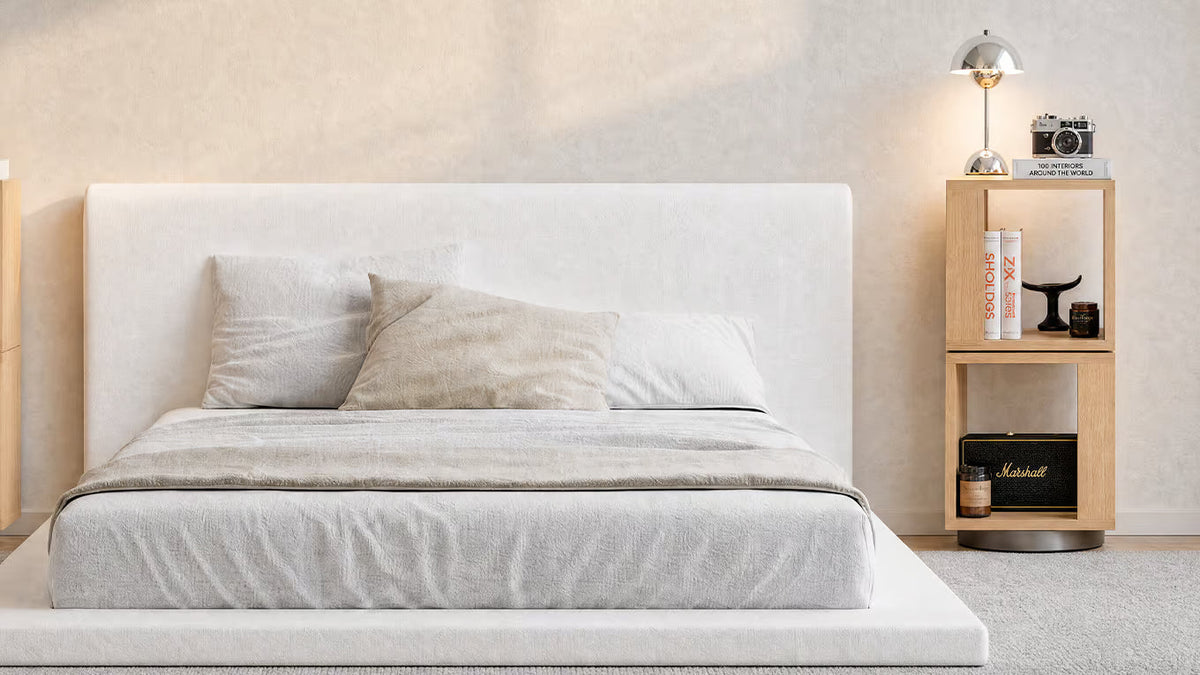
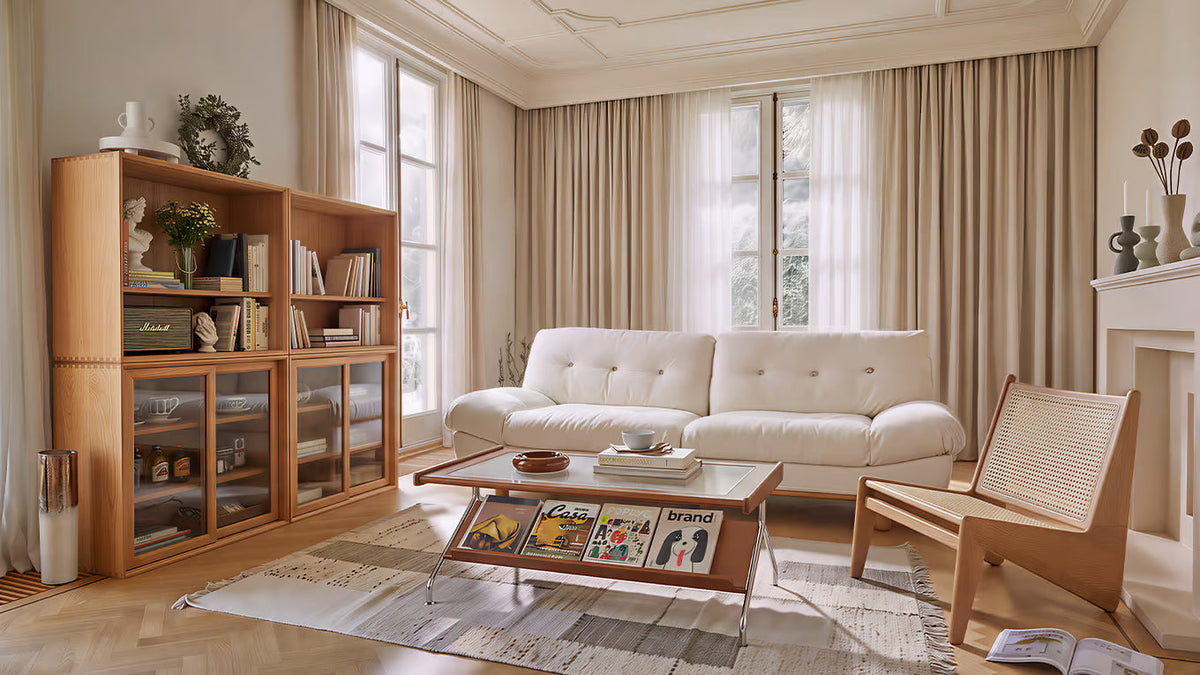
How to Fit Solid Wood Furniture Into a Small Apartment Without Crowding It
The piece fits the room and does not fit the stairwell. Square footage is rarely what goes wrong in a small apartment. Depth, door swing, and the route in are.

People talk themselves out of solid wood in a small apartment for the wrong reason. They assume it is about square footage, that real wood belongs in houses with room to spare, and that a small place calls for something thinner and lighter looking.
Square footage is rarely the thing that goes wrong. What goes wrong is depth, door swing, and the route from the sidewalk to the room. Those are measurable, and once you know which numbers to watch, solid wood stops being the problem and starts being the reason the room holds together.
Depth decides more than width
Width is the number everyone measures. Depth is the number that actually determines whether a room still works once the furniture is in it.
A standard American dresser runs 18 to 20 inches deep. Put one in a bedroom where the walkway between the bed and the wall is 32 inches, and you are down to a path barely wide enough to pass through sideways. Lose two inches of depth and that same walkway becomes comfortable. Nothing else about the piece changed.
This is why a shallower case is worth hunting for. A cabinet at roughly 15 to 16 inches deep gives back several inches of floor across its entire length, and in a narrow room those inches are the difference between a route and a squeeze. The storage you lose is less than you would expect, because most of what goes into a dresser is folded clothing, which is governed by the width of the drawer rather than how far back it goes.
Measure your walkways before you measure your walls. Thirty inches is a tolerable passage, thirty-six is comfortable, and anything under twenty-four will annoy you every day.
Doors that do not swing into the room
A hinged cabinet door needs clearance equal to its own width. A 20 inch door needs 20 inches of empty floor in front of it, every time you open it, and that floor cannot hold anything else.
In a house this is invisible. In a small apartment it is often the single biggest hidden cost of a piece of furniture, because the space a door needs is usually the same space you were planning to walk through.
Sliding panels remove the problem. A door that slides across the front of a cabinet never enters the room, so the cabinet can sit in a hallway, behind a dining chair, or beside a sofa with no reserved zone in front of it. Drawers are better than hinged doors for the same reason but not as good as sliding panels, because a drawer still needs pull-out space, just less of it.
When you are comparing two cabinets with similar storage, add the door swing to the footprint of the hinged one. That is the honest comparison.
Go up before you go wide
Floor is the scarce resource in a small apartment. Wall is usually sitting unused above waist height.
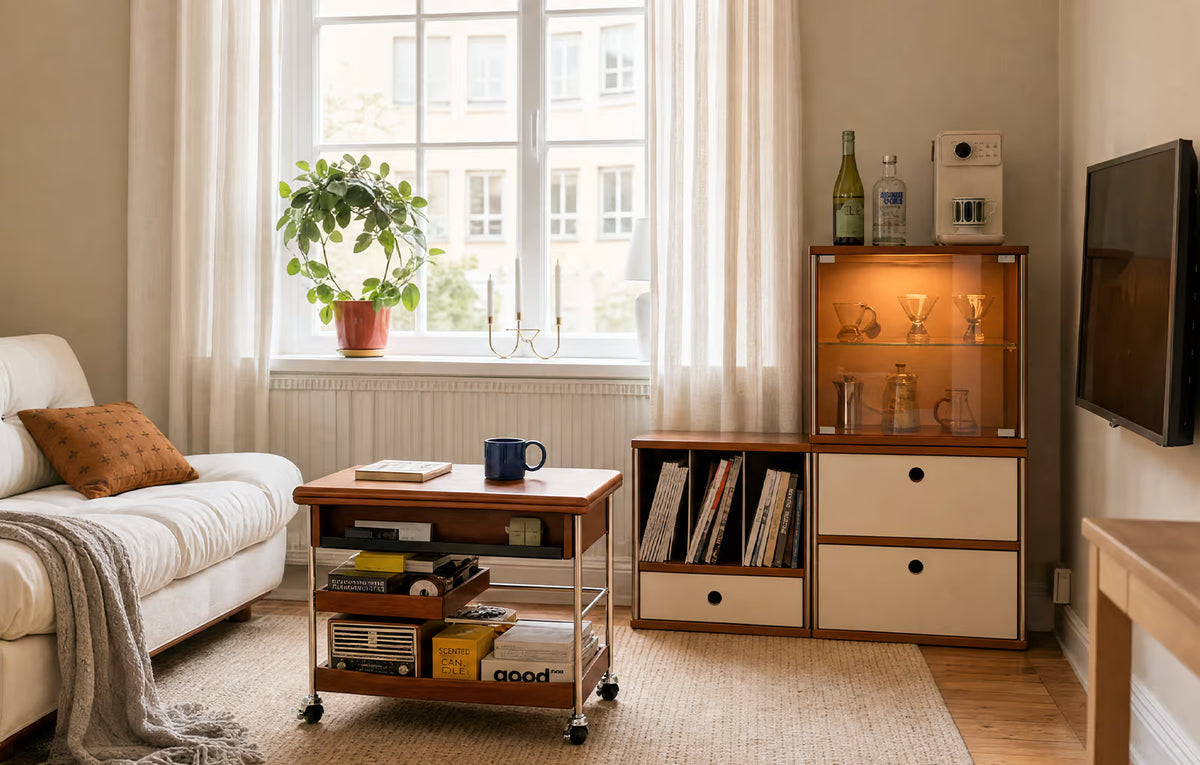
A tall narrow cabinet occupies a fraction of the floor that a long low one does while holding as much or more. Stacking works the same way, which is why modular pieces earn their place in small rooms: you buy to the length of wall you actually have, then add height later rather than width you cannot spare.
There is a trade-off worth naming. Tall furniture needs to be secured to the wall, and in a rental that means anchors and a few patched holes when you leave. It also reads heavier visually, so a tall piece wants a lighter wall around it and some empty space on at least one side. Do not line every wall with full-height storage and expect the room to breathe.
One piece doing several jobs
The fastest way to crowd a small apartment is to buy a separate object for every activity. A coffee table, a side table, a desk, and a dining table for two is four pieces of furniture for a room that can hold two.
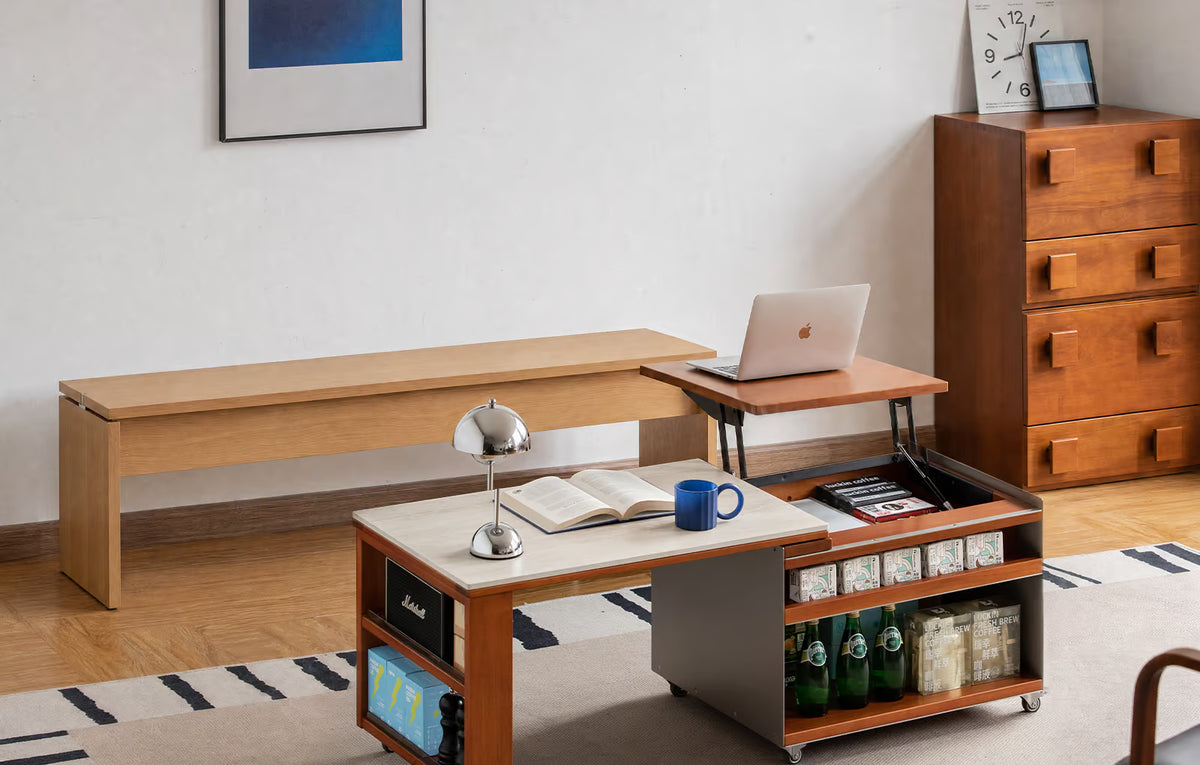
Look for pieces that change rather than multiply. A coffee table whose top lifts to working height covers the laptop hours without a desk in the corner. A bench serves a dining table, then moves to the end of the bed. A cabinet at the right height works as a console, a media unit, and a sideboard depending on which wall you put it against.
This is where solid wood pays off, incidentally. A piece that gets moved between rooms and re-tasked every couple of years takes a lot of handling, and solid wood joinery can be taken apart and put back together without losing its grip.
Measure the route, not just the room
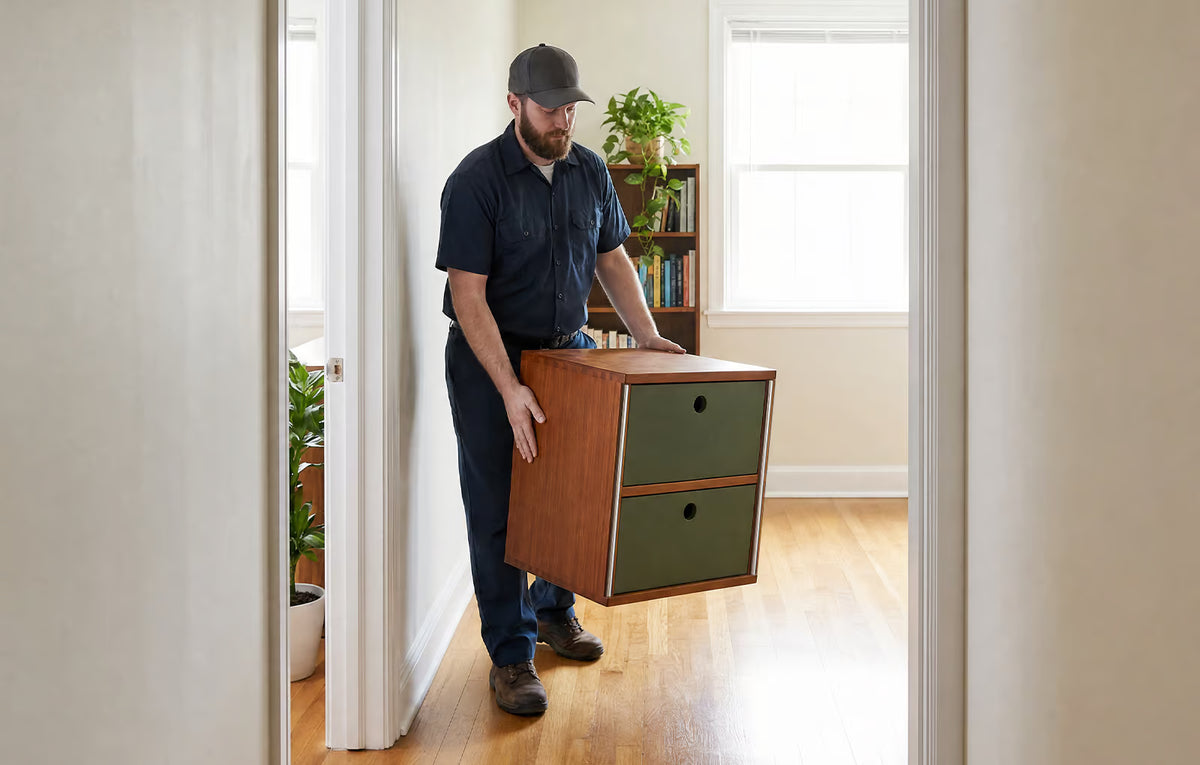
The most common furniture disaster in an apartment has nothing to do with the room. The piece fits the room and does not fit the stairwell.
Before you order anything large, measure the narrowest point of the entire path: the building entrance, the lift car and its door, the stair turn, your apartment door, and the width of the hallway at the point where it bends. A piece that is 63 inches tall has to tilt to come around a corner, and the diagonal it needs is bigger than any number on the product page.
Flat-packed furniture sidesteps this. Fully assembled furniture does not, and it is worth knowing which you are buying before delivery day rather than on it.
Let the floor show
One last thing, and it costs nothing. A room looks larger when you can see the floor continuing underneath and around things.
That argues for some pieces raised on legs, for leaving a gap at the end of a run rather than filling the wall to the corner, and for resisting the urge to push a rug tight against every baseboard. It also argues against matching everything. A room where all four walls carry the same wood tone at the same height feels smaller than one with variation in it.
Solid wood in a small apartment is not about restraint for its own sake. It is about choosing the few pieces that will still make sense in three years, measuring them properly, and leaving enough room around them that each one gets to be seen.